
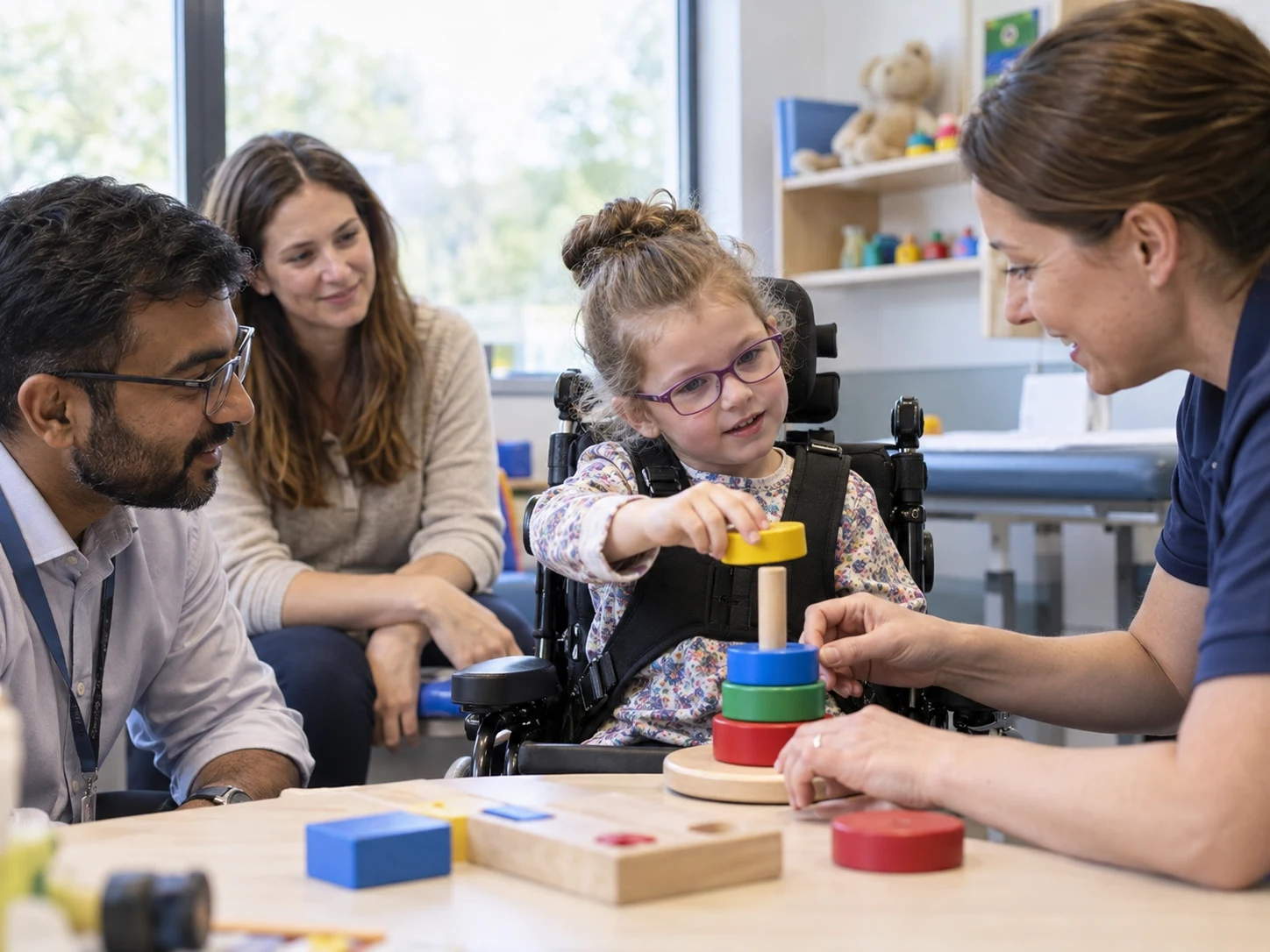
Diagnosing cerebral palsy usually involves assessing a child's development, movement and medical history rather than relying on one single test.
For some children, cerebral palsy can be identified relatively early. For others, it becomes clearer over time as developmental differences emerge.
How is Cerebral Palsy Diagnosed?
Healthcare professionals may assess:
- movement and coordination
- muscle tone
- posture
- reflexes
- developmental milestones
- medical and birth history.
Children with suspected cerebral palsy may be referred to specialists in child development for further assessment.
Tests for Cerebral Palsy
There is no single blood test or scan that can confirm every case.
Depending on the circumstances, investigations may include brain imaging such as an MRI scan. Other tests may be used to investigate associated difficulties or rule out alternative explanations for a child's symptoms.
The investigations recommended will depend on the individual child.
Why Can Diagnosis Take Time?
Some features of cerebral palsy become more apparent as children grow and attempt increasingly complex movements.
A young baby may therefore be monitored over a period of time before doctors can confidently make a diagnosis.
Waiting can understandably be difficult for families. Continue attending appointments and make healthcare professionals aware of new developmental changes or concerns.
What Happens Following Diagnosis?
After diagnosis, the focus shifts towards understanding your child's individual abilities and needs.
Support might involve paediatricians, physiotherapists, occupational therapists, speech and language therapists and other specialists.
Not every child requires every form of therapy.
Care should be based on what will benefit the individual child and reviewed as their needs change.
What If I Think My Child Has Cerebral Palsy?
If you are worried about your child's movements or development, contact your health visitor or GP.
Developmental differences have many possible explanations and do not automatically mean a child has cerebral palsy.
Parents can read Signs of Cerebral Palsy in Babies for information about early signs or When is Cerebral Palsy Diagnosed? for more detail about the timing of diagnosis.
Sources and further information
Useful websites
- NHS: Cerebral palsy
Overview of cerebral palsy, symptoms, causes, treatment and support.
- NHS: Cerebral palsy diagnosis
Information about assessments, scans and other tests.