
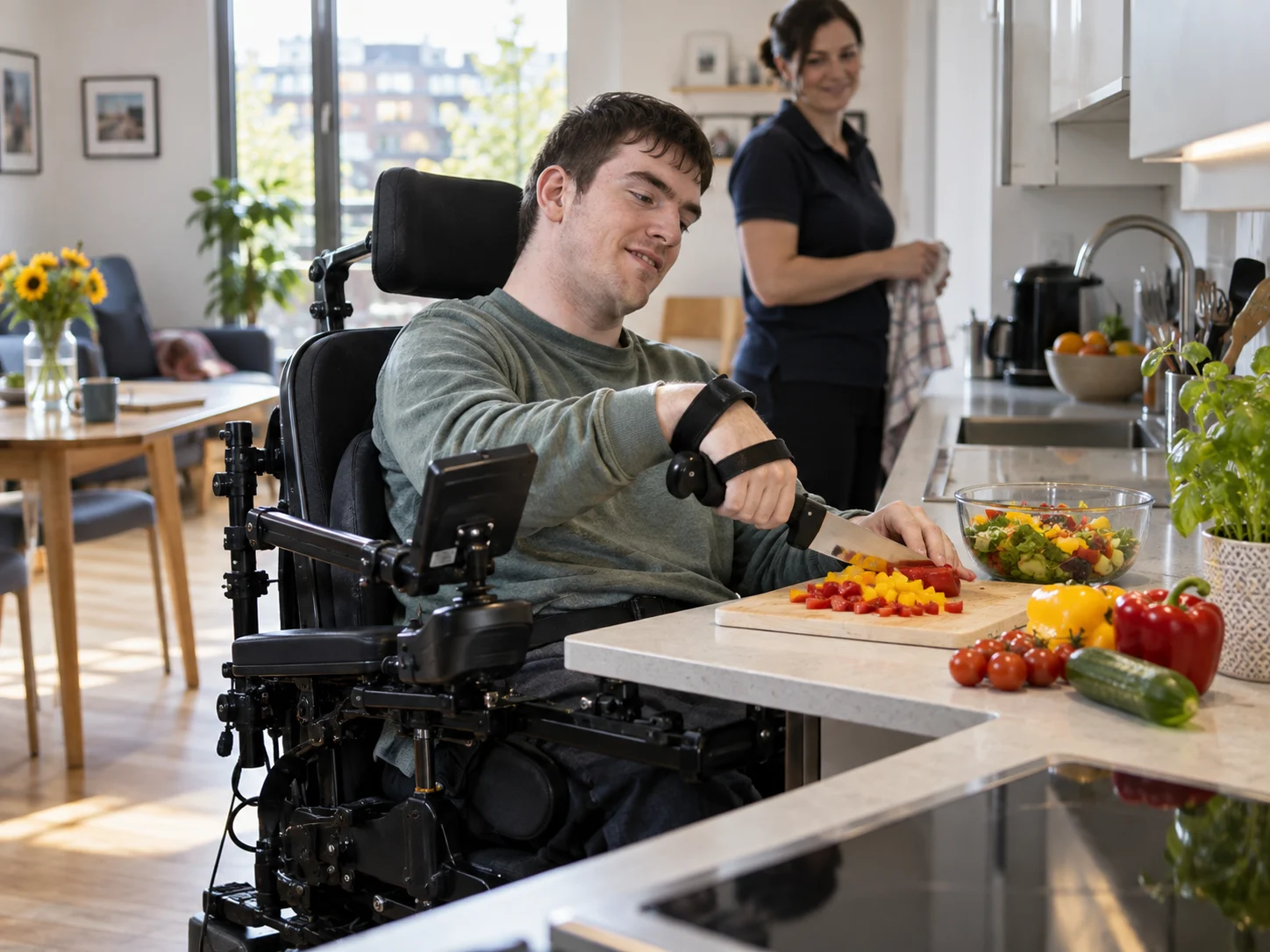
Cerebral palsy can affect everyday activities, but there is no single version of daily life with the condition.
The right routines, equipment and assistance depend on your abilities, environment and preferences.
Personal Care
Tasks such as dressing, washing and using the toilet may take longer or require adaptations.
Occupational therapists can help identify equipment or techniques that make daily activities easier.
For people who use personal assistance, having control over how support is provided can be an important part of independence.
Cooking and Eating
Adapted kitchen equipment, accessible storage and changes to food preparation can make cooking easier.
Some people with cerebral palsy also experience swallowing difficulties and may require assessment from an appropriate professional.
Getting Around
Mobility can involve walking independently, using walking aids, wheelchairs or a combination depending on the situation.
Planning accessible transport and checking venues in advance can sometimes make journeys easier.
Managing Fatigue
Some people with cerebral palsy use more energy to perform everyday movements and experience significant fatigue.
Planning rest, pacing activities and adapting routines can help.
Persistent or changing fatigue should also be discussed with a healthcare professional so other possible causes are not overlooked.
Technology at Home
Voice controls, smart-home devices, adapted computers and environmental controls can increase independence.
Small adaptations can sometimes remove a surprisingly large everyday barrier.
Finding Your Own Routine
There is no requirement to complete an activity in the same way as everybody else.
A useful adaptation is one that makes life safer, easier or more independent for you.
Sources and further information
Useful websites
- NHS: Cerebral palsy
Overview of cerebral palsy, symptoms, causes, treatment and support.