
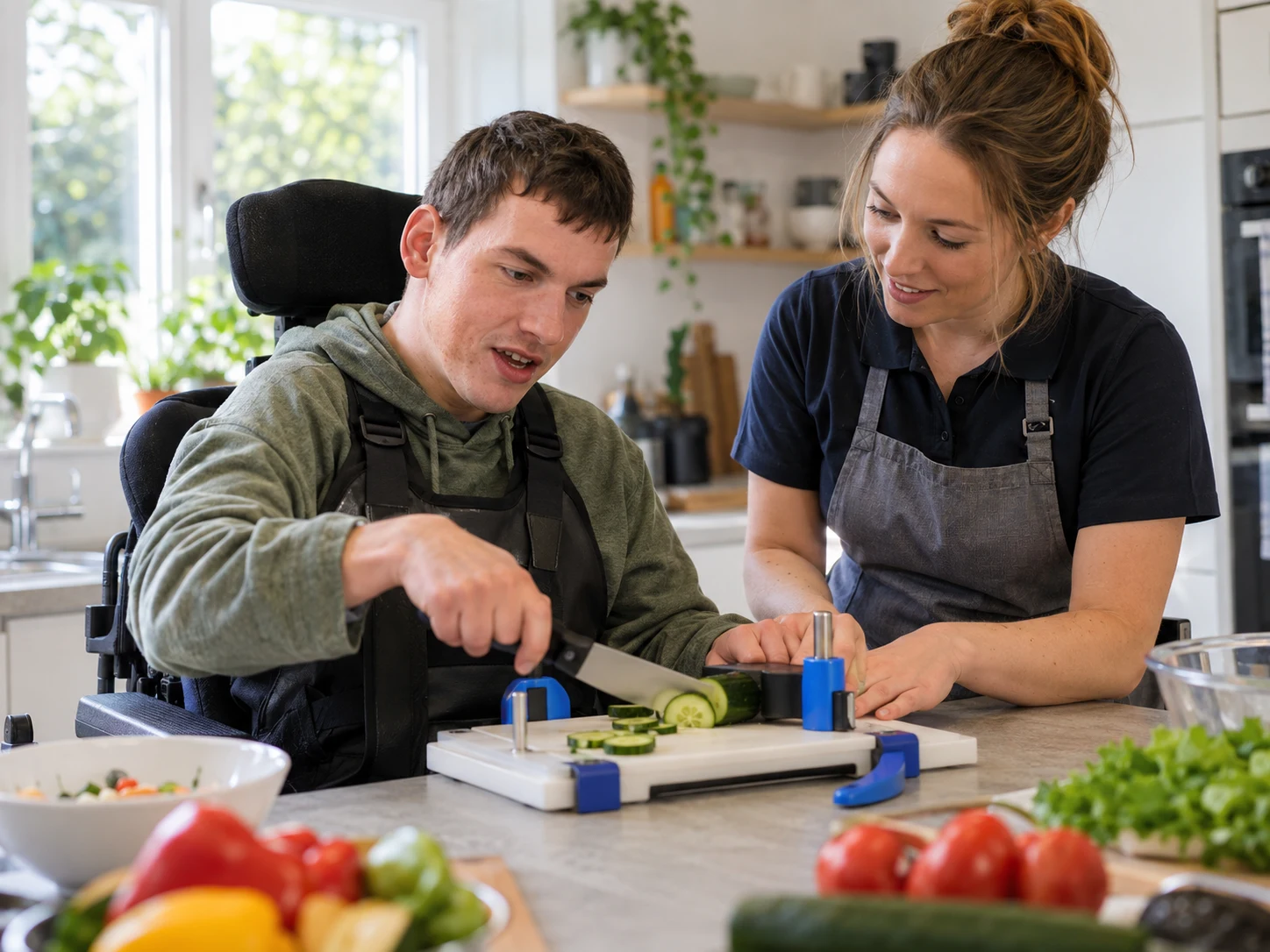
Occupational therapy helps people participate in the everyday activities that matter to them.
For someone with cerebral palsy, this might involve dressing, eating, writing, playing, studying, working or living more independently.
What Does an Occupational Therapist Do?
An occupational therapist looks at what someone wants or needs to do and identifies barriers making the activity difficult.
They may recommend:
- different ways of completing a task
- specialist equipment
- home adaptations
- seating or positioning solutions
- strategies for hand function
- assistive technology
- changes at school or work.
NHS guidance notes that occupational therapy can help identify difficulties with everyday tasks and suggest ways to make them easier.
Occupational Therapy for Children
For children, occupational therapy can support participation at home, school and during play.
A therapist might look at handwriting, using cutlery, getting dressed, accessing classroom activities or using equipment.
The goal is not simply to practise tasks but to find practical ways of increasing participation and independence.
Occupational Therapy for Adults
Adults may work with an occupational therapist around independent living, employment, personal care or managing the physical demands of everyday activities.
A therapist may also advise on housing adaptations or equipment.
Equipment and Adaptations
Small changes can sometimes make a substantial difference.
Examples include adapted cutlery, dressing aids, specialist seating, bathroom equipment and computer-access technology.
More extensive home adaptations may also be appropriate.
Supporting Independence
Occupational therapy is fundamentally about enabling people to do the things they need and want to do.
That might mean developing a skill, changing an environment, using equipment or finding a completely different way to accomplish the same task.
Sources and further information
Useful websites
- NHS: Cerebral palsy
Overview of cerebral palsy, symptoms, causes, treatment and support.