
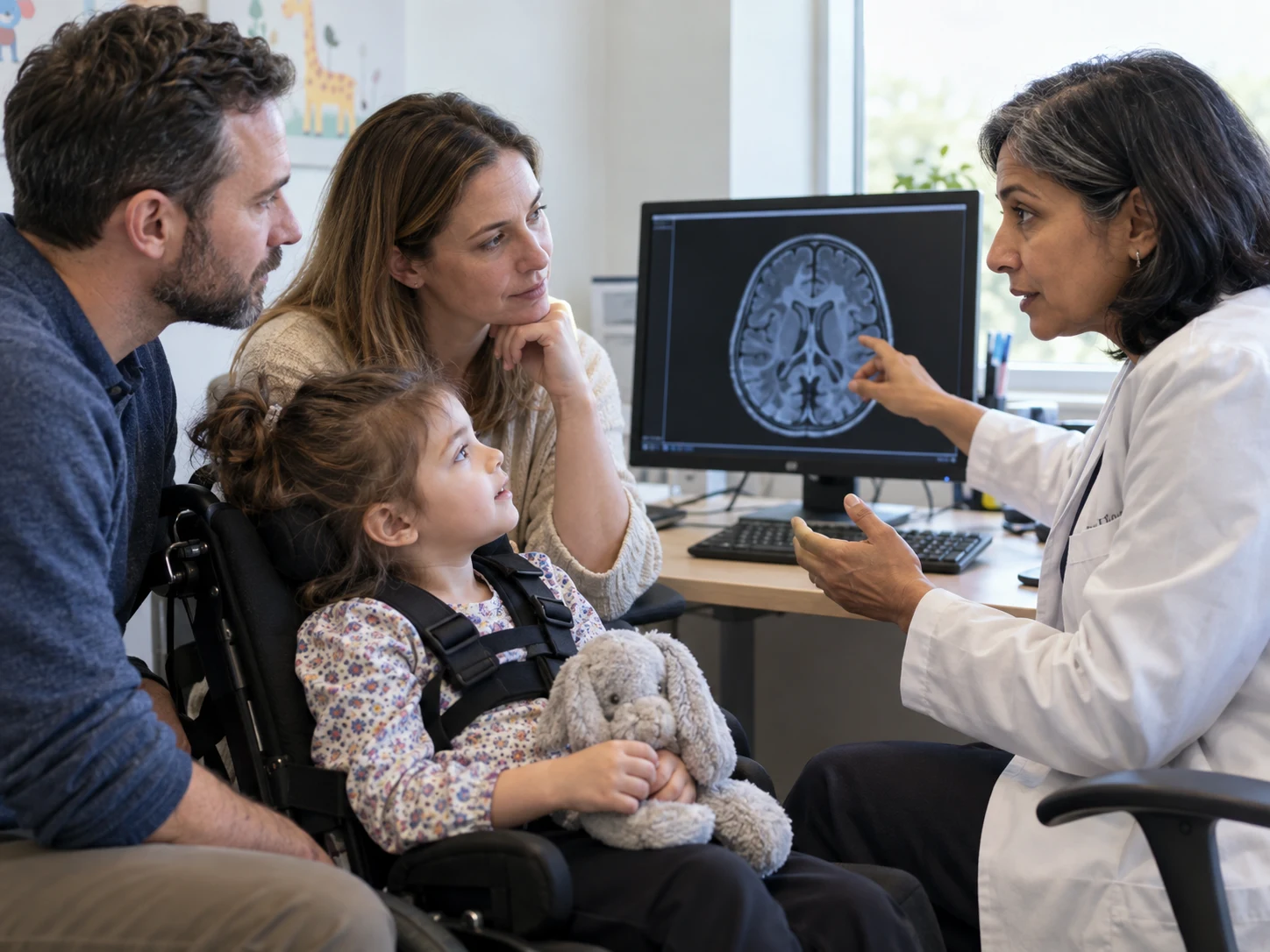
Cerebral palsy is caused by a problem affecting the developing brain before, during or shortly after birth.
The brain may develop differently or sustain damage to areas responsible for movement and coordination.
It is not always possible to establish exactly why this has happened.
Causes Before Birth
Many cases of cerebral palsy are associated with events occurring while the baby's brain is developing during pregnancy or due to difficulties during labour and the immediate period after a baby has been born.
Potential causes include:
- abnormal brain development
- reduced blood or oxygen supply to parts of the brain before, during or after birth
- stroke
- certain infections during pregnancy
- damage to the brain's structure.
The NHS notes that infections associated with cerebral palsy can include cytomegalovirus, rubella, chickenpox and toxoplasmosis.
Causes Around or After Birth
Cerebral palsy can sometimes result from brain damage occurring during or shortly after birth.
Possible causes include severe oxygen deprivation, meningitis, stroke, serious head injury or very low blood sugar.
Although birth complications can cause cerebral palsy, it is incorrect to assume that every case results from something going wrong during delivery.
Premature Birth and Cerebral Palsy
Being born prematurely increases the risk of cerebral palsy, particularly for babies born very early.
A premature baby's brain is less developed and therefore more vulnerable to certain forms of injury, which a term baby may not be affected by.
Multiple births and certain infections during pregnancy can also be associated with increased risk.
Having a risk factor does not mean that a child will necessarily develop cerebral palsy.
Is Cerebral Palsy Genetic?
Cerebral palsy is not usually described as a straightforward inherited condition.
However, brain development is complex, and genetic factors may contribute to some cases or to conditions that resemble cerebral palsy. If doctors suspect an underlying genetic condition, they may recommend further investigation or genetic testing.
Can the Cause Always Be Identified?
No; sometimes medical history and investigations provide a likely explanation, while in other cases no single cause can be established.
Not knowing exactly why cerebral palsy occurred does not prevent a child from receiving therapy, treatment or support based on their individual needs.
What Happens If My Child Is at Increased Risk?
Babies considered at increased risk may receive additional developmental monitoring.
Healthcare professionals can observe movement, muscle tone and developmental progress and arrange further assessment where necessary.
If you are concerned about your baby's development, speak to your health visitor, GP or another professional involved in their care.
Sources and further information
Useful websites
- NHS: Cerebral palsy
Overview of cerebral palsy, symptoms, causes, treatment and support.