
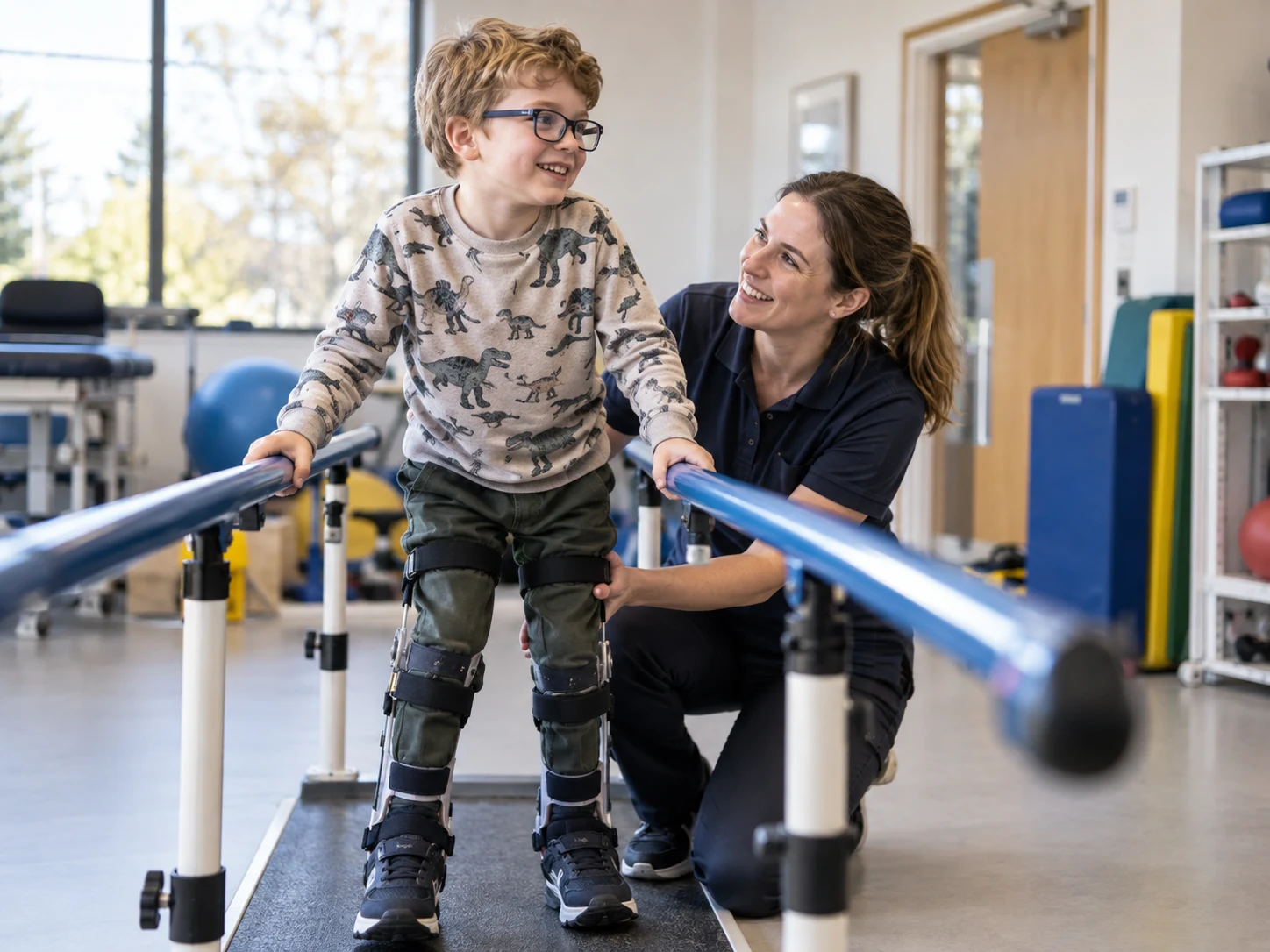
Physiotherapy is commonly used to help children and adults with cerebral palsy manage movement and physical function.
Treatment is personalised around the individual's abilities, difficulties and goals.
How Can Physiotherapy Help?
Depending on individual needs, physiotherapy may aim to:
- maintain or improve movement
- strengthen muscles
- maintain flexibility
- support balance and coordination
- improve posture
- reduce the impact of stiffness
- support mobility and everyday activities.
NHS guidance identifies physiotherapy as an important cerebral palsy treatment and describes exercise and stretching as ways of helping maintain physical ability and address movement difficulties.
Physiotherapy for Children
A paediatric physiotherapist can assess how a child moves and identify areas where support may be useful.
Therapy can be incorporated into play and everyday activities.
Parents and carers may also be shown exercises or positioning techniques that can be used at home. The programme should be tailored to the child rather than applying the same exercises to everyone.
Physiotherapy for Adults
Physiotherapy can remain relevant throughout adulthood.
An adult with cerebral palsy may seek physiotherapy for mobility, stiffness, pain, posture, strength or changes in physical function.
Therapy goals can also change with work, lifestyle and ageing.
What Happens at an Appointment?
A physiotherapist may assess movement, muscle strength, flexibility, posture, walking and balance.
They can then agree goals with the person or family and develop an appropriate treatment programme.
Equipment or other specialist input may be recommended where necessary.
Is Physiotherapy a Cure?
No. Physiotherapy cannot cure cerebral palsy or reverse the original problem affecting the brain.
Instead, it aims to help manage the physical effects of cerebral palsy and support function, comfort and participation.
Sources and further information
Useful websites
- NHS: Cerebral palsy
Overview of cerebral palsy, symptoms, causes, treatment and support.