
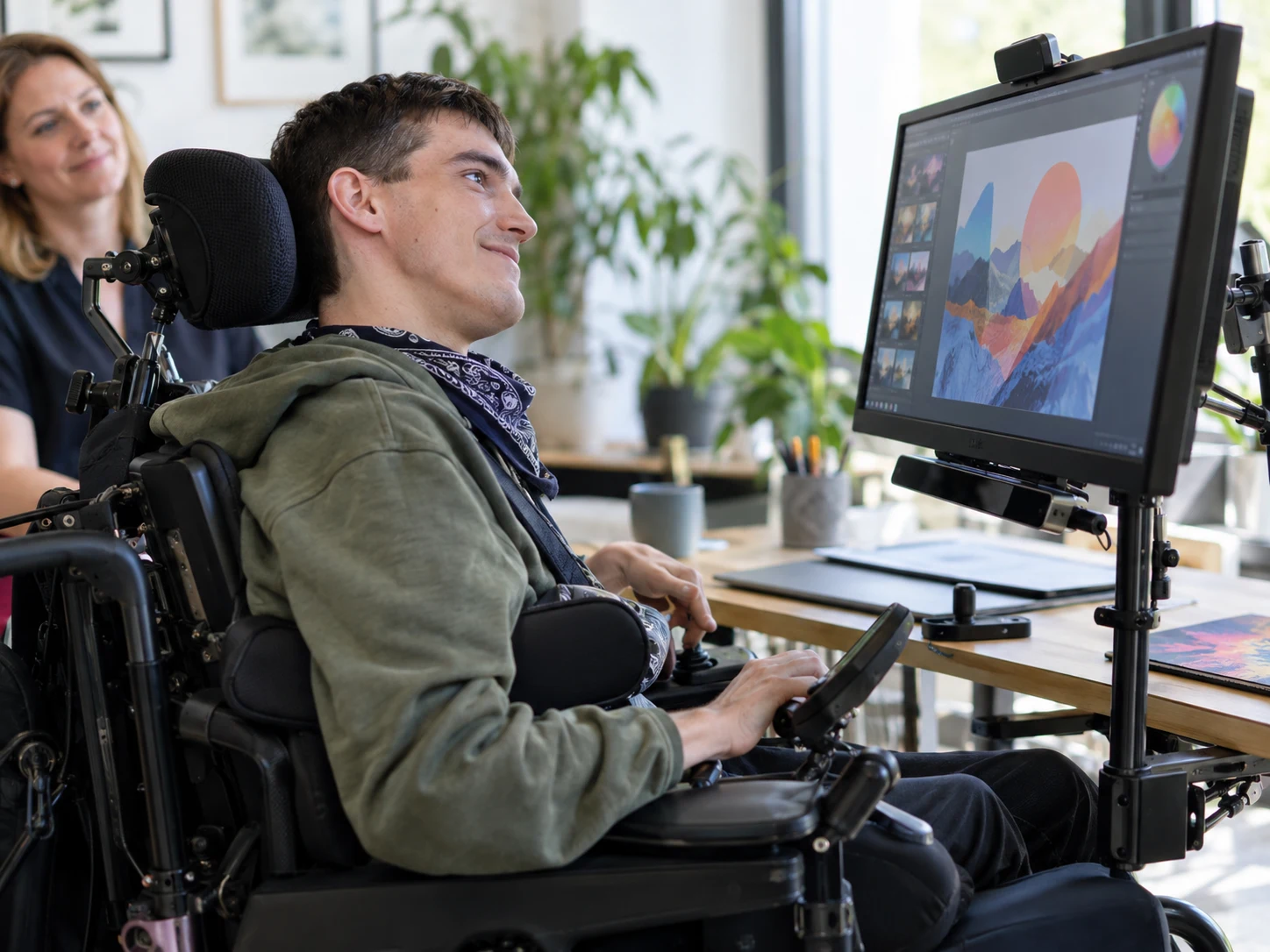
Assistive technology can help people with cerebral palsy communicate, move around, learn, work and complete everyday activities more independently.
Technology can range from simple adapted equipment to sophisticated electronic systems.
Communication Technology
People who have difficulty using speech may benefit from augmentative and alternative communication.
Options can include communication apps, speech-generating devices, switches and eye-gaze systems.
The right solution depends on movement, vision, communication ability and personal preference.
Computers and Digital Devices
Adapted keyboards, alternative mice, touchscreens, switches, voice control and eye-gaze technology can make computers accessible to people with different physical abilities.
This can support education, employment, entertainment and social interaction.
Mobility and Independence
Assistive technology can also include powered mobility equipment and environmental controls.
Smart-home technology may enable someone to control lights, doors, entertainment or other devices more easily.
Choosing the Right Technology
The most advanced device is not automatically the best one.
Equipment needs to work reliably in the places where it will actually be used and should suit the person's abilities and goals.
An occupational therapist, speech and language therapist or other specialist may be able to assess needs and recommend appropriate technology.
Technology Can Change with You
A child's needs may change as they grow, while adults may discover new solutions as work or living arrangements change.
Regularly reviewing equipment helps ensure it remains practical and useful.
Assistive technology is ultimately about removing barriers and giving people greater control over communication, activities and everyday life.
Sources and further information
Useful websites
- NHS: Cerebral palsy
Overview of cerebral palsy, symptoms, causes, treatment and support.