
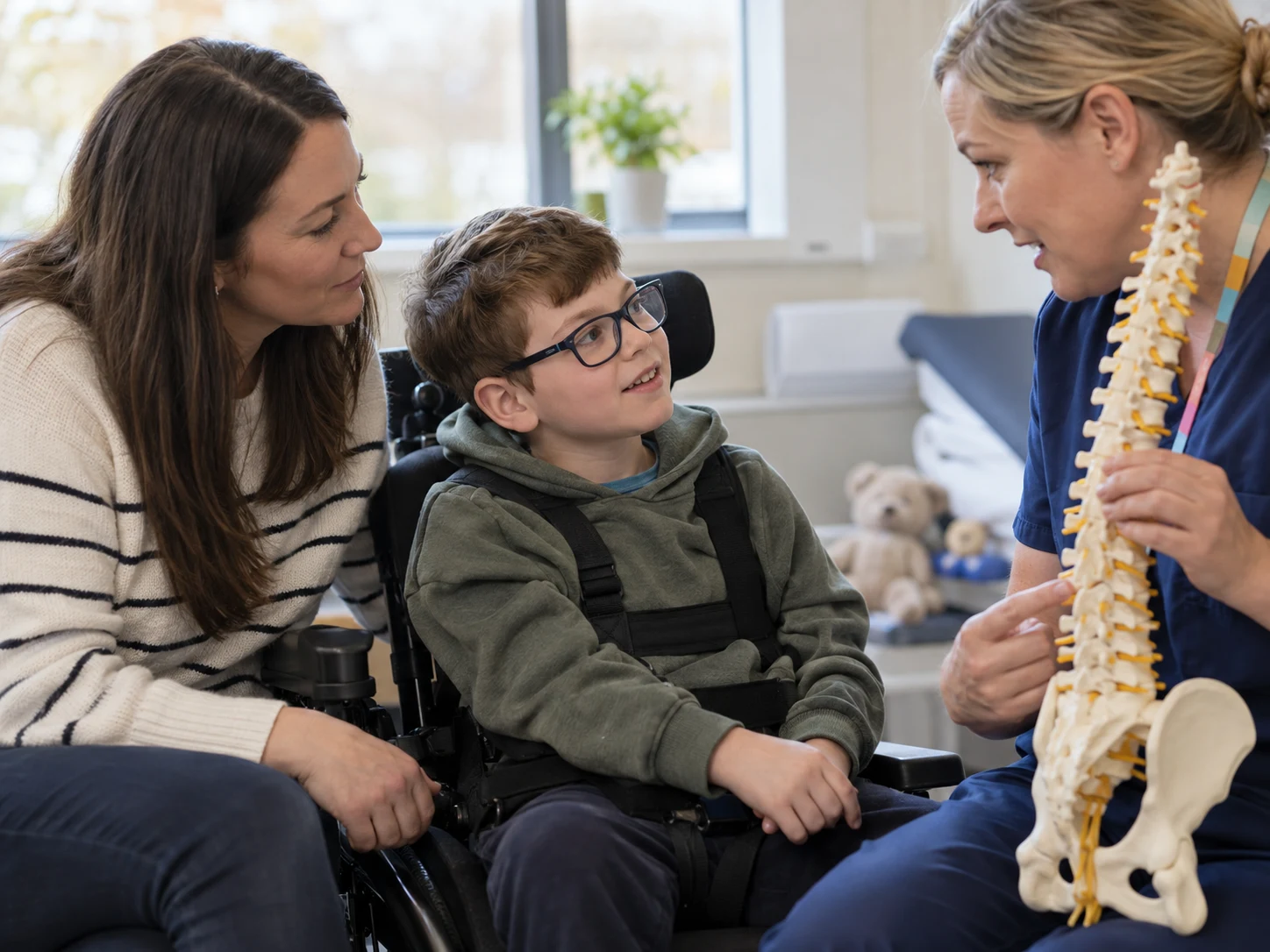
Selective dorsal rhizotomy, usually shortened to SDR, is an operation that may be considered for some people with spastic cerebral palsy.
It aims to permanently reduce spasticity in the legs by interrupting selected sensory nerve fibres involved in excessive muscle stiffness.
What Happens During SDR?
During surgery, selected nerve fibres are identified and divided.
Because the procedure permanently changes the nerve pathways involved in spasticity, deciding whether SDR is appropriate requires specialist assessment.
It is not a general treatment for every type of cerebral palsy.
Who May Be Considered for SDR?
Eligibility depends on numerous factors, including the type of cerebral palsy, pattern of spasticity, physical abilities, age and overall health.
Specialist teams assess potential benefits and risks for each person.
Being diagnosed with spastic cerebral palsy does not automatically mean SDR will be recommended.
Physiotherapy After SDR
Rehabilitation is an important part of treatment.
Reducing spasticity does not automatically create strength or new movement skills. Physiotherapy after surgery is therefore used to help the person adapt to changes in muscle tone and work towards appropriate functional goals.
Families considering SDR should understand the rehabilitation commitment as well as the operation itself.
Potential Benefits and Risks
The intended benefit is a long-term reduction in spasticity.
However, all surgery carries risks, and outcomes vary. SDR also cannot reverse the brain injury responsible for cerebral palsy.
A specialist multidisciplinary team can explain likely outcomes, possible complications and alternatives based on the individual.
Making a Decision About SDR
SDR is a significant and irreversible intervention.
Families and patients should have the opportunity to ask questions about expected outcomes, rehabilitation, alternative treatments and the evidence relevant to their circumstances before deciding whether to proceed.
Sources and further information
Useful websites
- NHS: Cerebral palsy
Overview of cerebral palsy, symptoms, causes, treatment and support.