
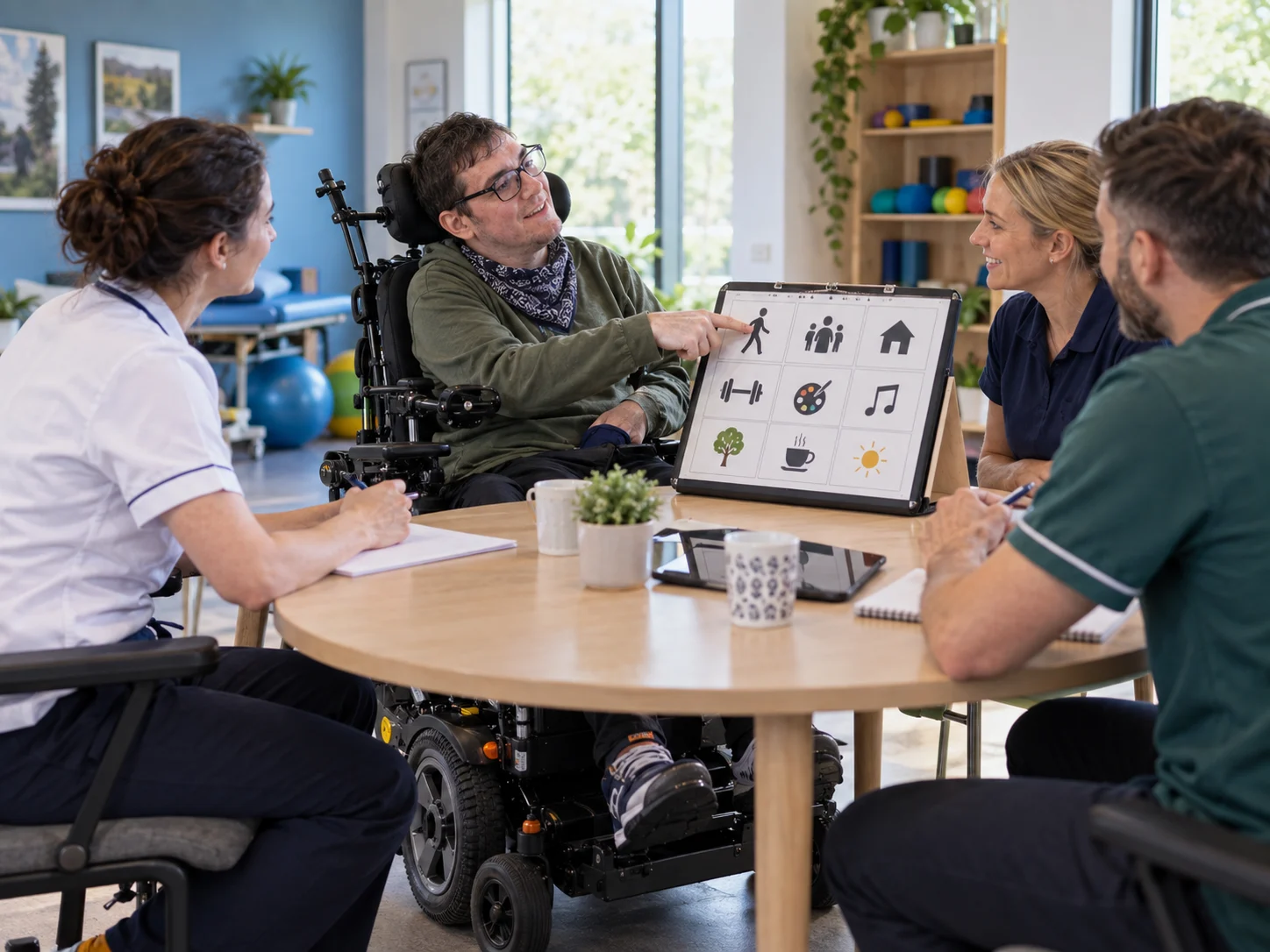
Cerebral palsy can affect people in different ways, so the professionals involved will vary. Support should be based on the person’s goals, abilities, health and circumstances rather than a fixed list of services.
Health and therapy
A GP or paediatrician may help coordinate medical care and referrals. Physiotherapists focus on movement, posture and physical function. Occupational therapists look at everyday activities, independence, equipment and adaptations. Speech and language therapists may support communication and swallowing. Other specialists can become involved when there are needs relating to hearing, vision, feeding, pain, muscles, bones or mental health.
Education and social care
Teachers, special educational needs coordinators and educational psychologists may help identify support for learning and participation. Social workers and local authority teams may assess care, equipment, short breaks or support at home. Benefits advisers and charities can help people understand financial and practical options.
Working together
Ask who your main contact is and how information is shared between services. Keep a current list of names, roles and contact details. Tell each professional about changes recommended by another service. You can also ask for plans and decisions in an accessible format.