
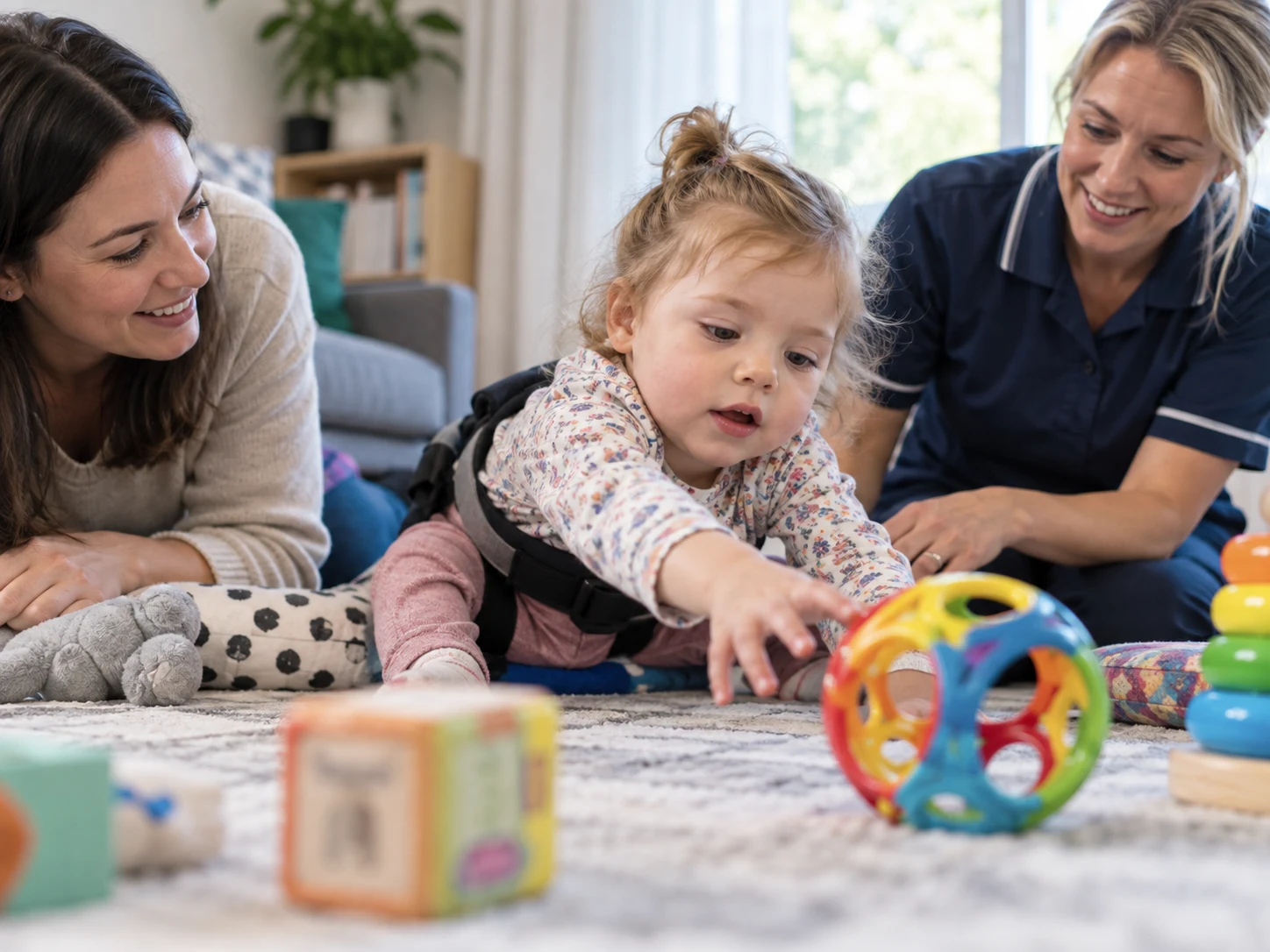
The symptoms of cerebral palsy vary significantly between people. They primarily involve movement, posture and coordination, although cerebral palsy can be associated with a range of other difficulties.
Symptoms often become noticeable during early childhood as a child develops and begins reaching, or has difficulty reaching, developmental milestones.
Movement and Coordination Symptoms
Possible cerebral palsy symptoms include:
- unusually stiff or tight muscles
- unusually floppy muscles
- muscle weakness
- involuntary or uncontrolled movements
- muscle spasms
- tremors
- difficulties with balance
- difficulties coordinating movement
- walking on tiptoes
- an unusual walking pattern
- differences in posture.
Symptoms can affect the whole body or predominantly affect particular limbs or one side of the body.
Developmental Delays
For some children, one of the first indications is taking longer than expected to reach developmental milestones.
This could involve difficulties learning to sit, crawl, stand or walk.
Development varies naturally between children, however, and a developmental delay does not by itself establish that a child has cerebral palsy.
Other Difficulties Associated with Cerebral Palsy
Cerebral palsy mainly affects movement, but some people have additional difficulties.
These can include problems with:
- speech and communication
- eating or swallowing
- saliva control
- vision
- hearing
- sleep
- bladder or bowel control.
Some people with cerebral palsy also have epilepsy or a learning disability. These associated conditions are not present in everyone.
Do Symptoms Get Worse?
Cerebral palsy itself results from a non-progressive problem with the developing brain, so the underlying brain injury does not progressively deteriorate.
However, symptoms and their impact can change over a person's lifetime.
Growth, ageing and the physical demands placed on muscles and joints can affect mobility, pain and fatigue. Regular reviews can help identify changing needs.
Symptoms Vary Between Individuals
There is an extremely wide range of cerebral palsy presentations.
One person might walk independently but have difficulties with balance or fine motor control. Another might use a wheelchair and require assistance with many daily activities.
Communication ability and physical ability should not be assumed to be the same thing. Someone with significant physical or speech difficulties may understand far more than their movements or speech allow them to express.
When Should I Seek Medical Advice?
Speak to your health visitor or GP if you are concerned about your child's health, movements or development.
Signs associated with cerebral palsy can also occur for other reasons. A healthcare professional can assess your concerns and, where appropriate, refer your child for further developmental assessment.
Parents of younger children can also read our dedicated page for signs of cerebral palsy in babies.
Sources and further information
Useful websites
- NHS: Cerebral palsy
Overview of cerebral palsy, symptoms, causes, treatment and support.